

EXPOSED, 2112
This collection is informed by the figure of the Borg from Star Trek, a cinematic embodiment of total assimilation. The Borg absorb entire civilizations, folding individual memory, knowledge, and skill into a single collective consciousness oriented toward perfection. With each act of assimilation, the collective advances, but individuality is erased. Existence continues, yet distinct identity is lost.
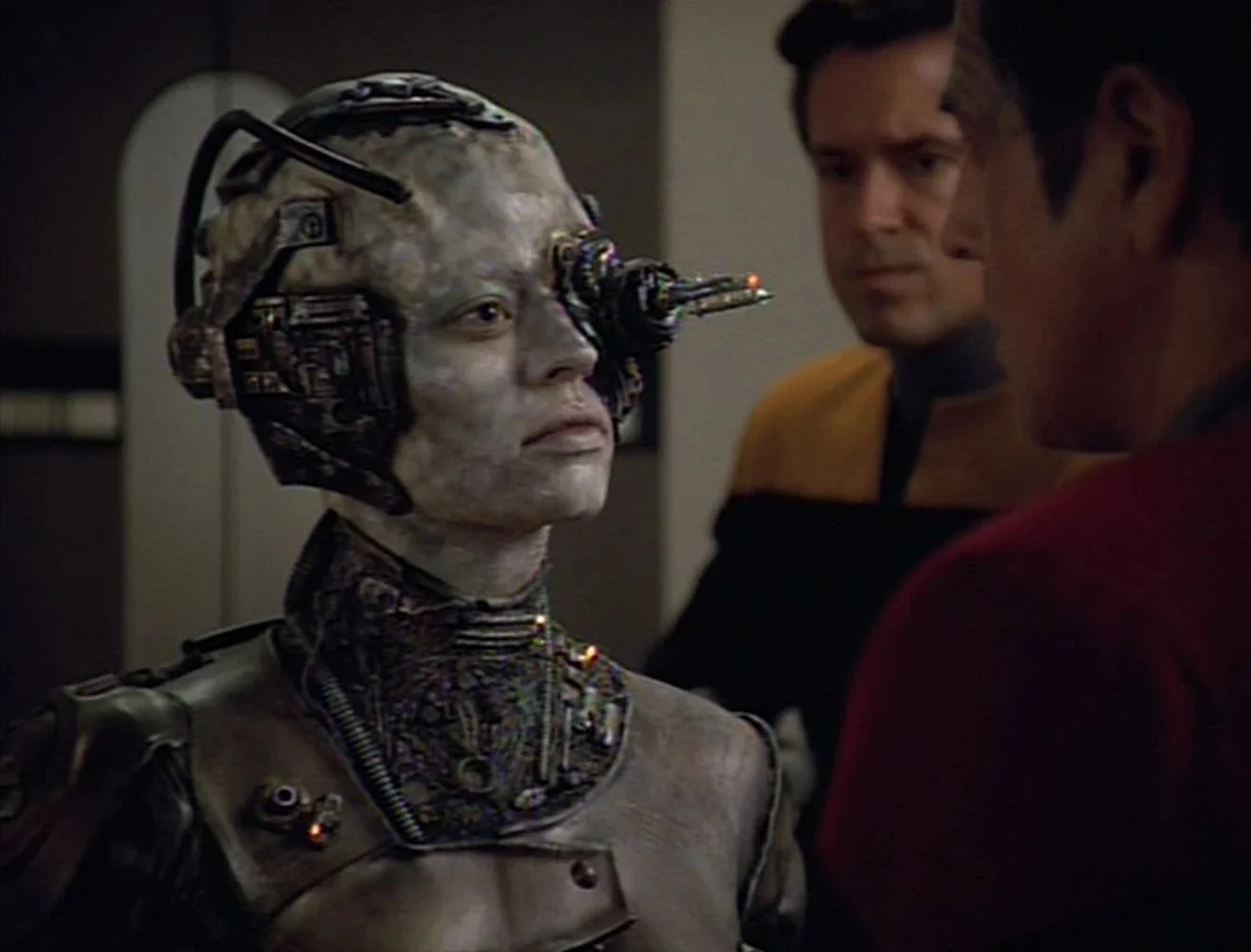

Extended engagement with social media revealed a contemporary parallel to this model. In the pursuit of visibility, relevance, and virality, creative output increasingly converges toward sameness. This convergence is not enforced by an external antagonist, but by internal pressure to conform to dominant aesthetics, trends, and behaviors. Distinctiveness erodes through repetition rather than force.
This concern intensifies in the context of artificial intelligence. AI functions as a contemporary manifestation of the collective, aggregating vast quantities of human-made material in order to generate new outputs. It operates as an all-encompassing system that draws from everything it is given. The question becomes not whether AI can create, but whether creation under these conditions can retain individual voice. If experience, memory, and expression are continuously absorbed into a singular computational system, what becomes of originality over time.
Process:
The process intentionally mirrors the logic of assimilation. Artificial intelligence is treated not as a tool, but as a collaborator, functioning as a contemporary analogue to the Borg collective.
The work begins with the eye, selected as one of the most intimate and immediately recognizable human features. Using a Canon 5D Mark IV paired with an MP-E 65mm macro lens, the eyes of eight family members were photographed, forming a small and contained human collective. Each iris was then isolated in Photoshop and merged into a single composite image.


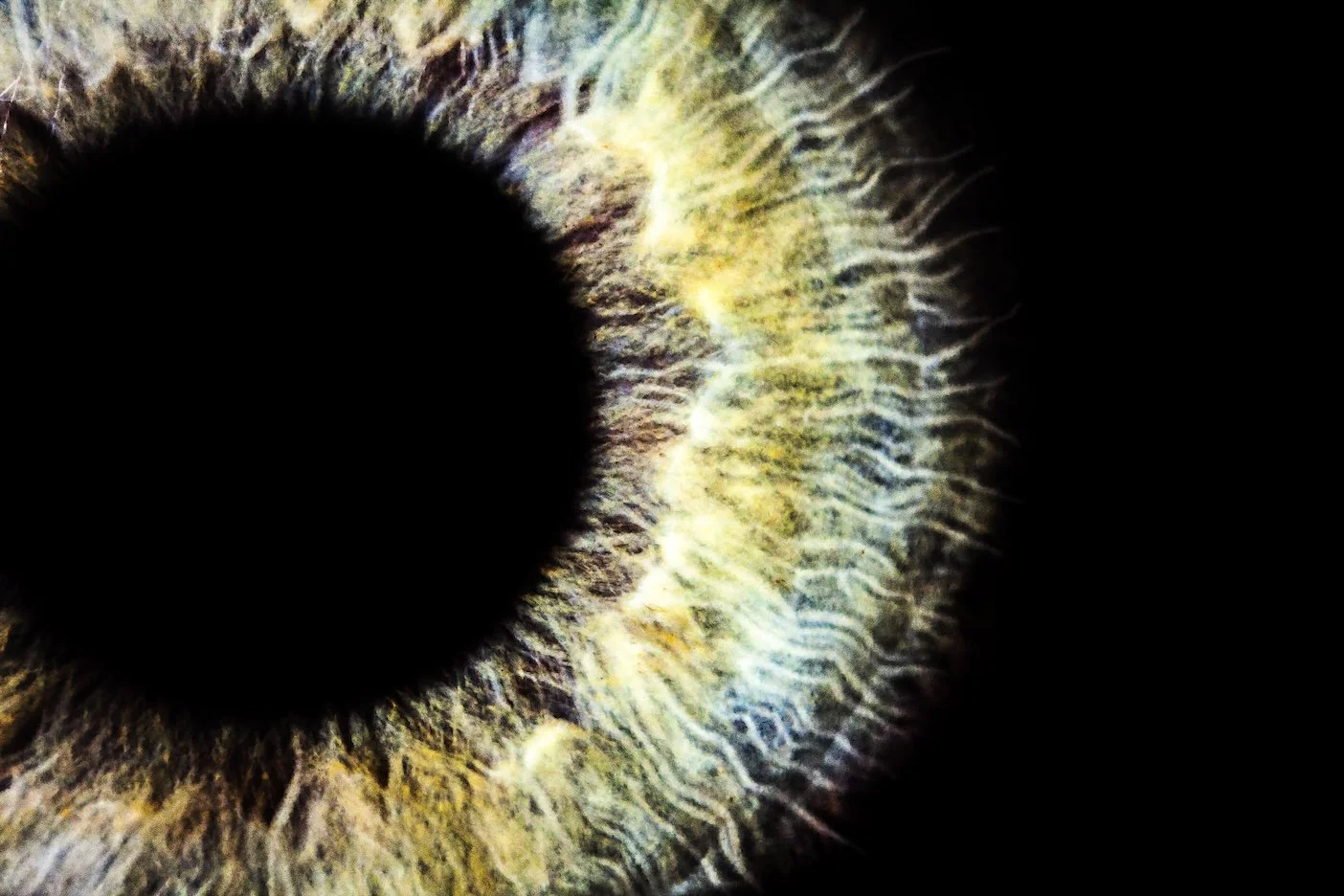


This composite was introduced into an AI image generator, which produced new ocular forms derived from the aggregated source material. These AI-generated eyes represent the collective perspective of the system rather than any single individual.
The resulting images were returned to Photoshop, where additional layers of personal photography were embedded into the pupils. These images depict shared family experiences and moments of private memory. The surrounding environment was reconstructed to reference the interior of a Borg Cube, the vessel associated with assimilation and control.
The final works occupy an ambiguous state. They retain traces of humanity while exhibiting a distinctly synthetic presence. Neither fully human nor fully machine, they reflect the tension between individuality and absorption.
The collection ultimately resists resolution. It does not offer a definitive position on whether assimilation is inevitable or whether resistance remains possible. Instead, it frames artificial intelligence as a threshold moment, one that forces a reconsideration of authorship, identity, and the future of distinct human expression.


